Dodge · Known Issues
2022 Dodge Challenger Problems: 22 Known Issues
2022 model year · 2,118+ owner reports · Updated September 2026
2022 · All trims · All engines
Choose the year and equipment for your written issues and visual request.
2022 model year · 2,118+ owner reports · Updated September 2026
2022 · All trims · All engines
Choose the year and equipment for your written issues and visual request.
Interest applies to the selected vehicle and configuration; it is not a reservation. Voting stores a first-party identifier for up to 180 days to prevent repeat votes. No account or email is needed. Clearing cookies or using another device may count separately. Privacy
Visual Known Issues · Coming soon
$4.99/month plus taxes at launch · No payment today
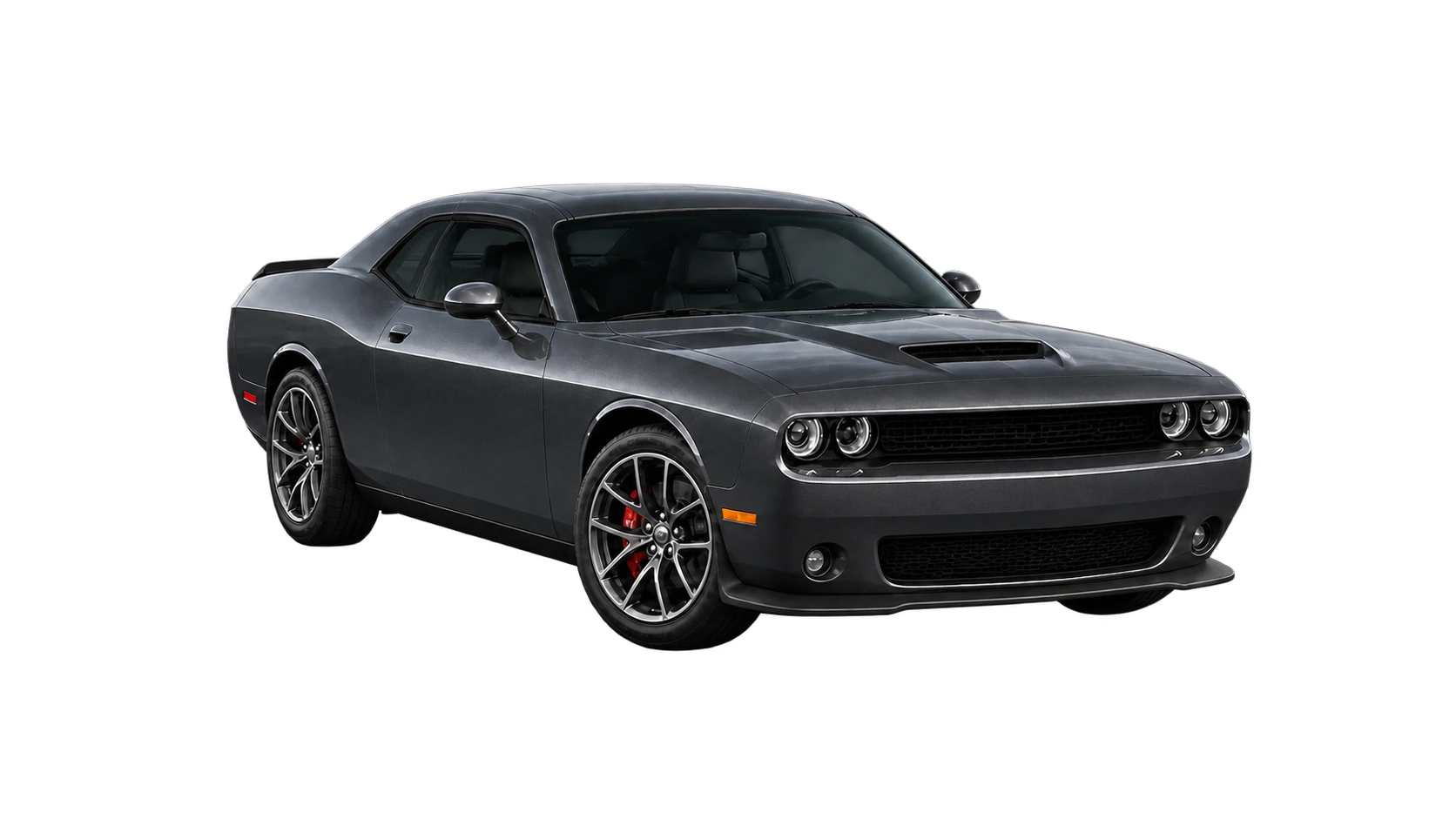
2015 Dodge Challenger SRT 392 silhouette · model reference only; selected body style is not shown
According to Au7o's analysis of 2,118+ owner reports, the 2022 Dodge Challenger has 22 documented known issues, with 4 rated critical. The most serious are Driveshaft Failure / U-Joint Failure ($300-$2,500 repair), Electronic Power Steering (EPS) Rack Failure ($1,200-$2,800 repair), Hellcat IHI Supercharger Bearing / Pulley Failure ($3,000-$12,000 repair) and Valve Spring Failure on 6.4L 392 HEMI (High-RPM and Modified/Boosted Cars) ($700-$5,000 repair). The most commonly reported issue is Driveshaft Failure / U-Joint Failure with 523 owner reports. Across all issues with published estimates, repair costs range from $20 to $12,000. DIY maintenance guides at au7o.io.
ELECTRICAL SYSTEM: INSTRUMENT CLUSTER/PANEL
Chrysler (FCA US, LLC) is recalling certain 2021 Dodge Challenger vehicles. The affected vehicles do not illuminate their safety system status indicators sufficiently in both daylight and nighttime driving conditions. As such, these vehicles fail to comply with the requirements of Federal Motor Vehicle Safety Standard number 101, "Control and Displays."
VISIBILITY:WINDSHIELD
Chrysler (FCA US, LLC) is recalling certain 2020-2021 Dodge Challenger, Dodge Charger, and Chrysler 300 vehicles. During manufacturing, the windshield may not have been properly bonded to the vehicle, allowing it to detach in a crash. As such, these vehicles fail to comply with the requirements of Federal Motor Vehicle Safety Standard number 212, "Windshield Mounting."
TIRES:PRESSURE MONITORING AND REGULATING SYSTEMS
Chrysler (FCA US LLC) is recalling certain 2022 Dodge Challenger, Dodge Charger, and Chrysler 300 vehicles. The Tire Pressure Monitoring System (TPMS) sensor battery may fail prematurely and cause the sensor to become inoperative. As such, these vehicles fail to comply with the requirements of Federal Motor Vehicle Safety Standard number 138, "Tire Pressure Monitoring Systems."
TIRES:PRESSURE MONITORING AND REGULATING SYSTEMS
Chrysler (FCA US LLC) is recalling certain 2022 Dodge Challenger, Dodge Charger, and Chrysler 300 vehicles. The Tire Pressure Monitoring System (TPMS) sensor battery may fail prematurely and cause the sensor to become inoperative. As such, these vehicles fail to comply with the requirements of Federal Motor Vehicle Safety Standard number 138, "Tire Pressure Monitoring Systems."
PARKING BRAKE
Chrysler (FCA US, LLC) is recalling certain 2023 Chrysler 300, Dodge Charger, and Dodge Challenger vehicles. The parking brake may be improperly adjusted, which can result in a vehicle roll away. As such, these vehicles fail to comply with the requirements of Federal Motor Vehicle Safety Standard number 135, "Light Vehicle Brake Systems."
+ 4 more recalls. Check all on NHTSA.gov
Enter your VIN at NHTSA.gov to check recalls specific to your vehicle.
Don't see your problem? Describe your symptoms to get a diagnosis, or get a full repair guide.
According to Au7o's analysis of 2,118+ owner reports, the 2022 Dodge Challenger has 22 documented issues. The most frequently reported are: Driveshaft Failure / U-Joint Failure, Electronic Power Steering (EPS) Rack Failure, Hellcat IHI Supercharger Bearing / Pulley Failure. Of these, 4 are rated critical and should be addressed promptly.
The 2022 Dodge Challenger has 22 known issues documented across 2,118+ owner reports. 4 issues are rated critical: Driveshaft Failure / U-Joint Failure and Electronic Power Steering (EPS) Rack Failure and Hellcat IHI Supercharger Bearing / Pulley Failure and Valve Spring Failure on 6.4L 392 HEMI (High-RPM and Modified/Boosted Cars). Prospective buyers should inspect for these issues and factor potential repair costs into their purchase decision. Regular maintenance following the manufacturer's schedule helps prevent many common problems.
Repair costs for known Dodge Challenger issues range from $0 to $12,000, depending on the specific problem and whether you choose DIY or professional repair. The most critical issue, Driveshaft Failure / U-Joint Failure, typically costs $300-$2,500 to repair. Au7o provides step-by-step DIY maintenance guides that can help reduce repair costs.
The rear driveshaft on high-powered Challengers can experience premature U-joint failure or driveshaft issues, especially under hard launches, drag racing, or with aftermarket power upgrades. The factory driveshaft may not handle repeated high-torque loads. Some owners report mul… Repairs typically run $300-$2,500. Severity: high.
The EPS rack assembly can fail suddenly, causing complete loss of steering assist while driving. Circuit board contamination in the EPS module causes short circuit. Corrosion in rack assembly compounds the issue. Recalls S19 (NHTSA 16V-167) and VB8 (NHTSA 19V-812) cover some vehi… Repairs typically run $1,200-$2,800. Severity: high.
The IHI twin-screw supercharger fitted to the 6.2L supercharged HEMI in the Challenger SRT Hellcat, Redeye, and Demon is prone to internal bearing failure, typically heard first as a rising whine, growl, or whir from the front of the engine that gets louder with RPM and engine wa… Repairs typically run $3,000-$12,000. Severity: high.
The production valve springs on the 6.4L 392 HEMI can crack or fracture. A weakened spring can cause a persistent single-cylinder misfire that remains after plug, coil, or injector swaps; a complete fracture can let the valve contact the piston and cause major cylinder-head or en… Repairs typically run $700-$5,000. Severity: high.
The plastic oil filter housing warps and cracks from heat cycling, causing oil leaks from front of engine near oil filter. In severe cases coolant and oil can mix. Common across all Pentastar 3.6L vehicles (Challenger, Charger, 300, Jeep, Ram). Repairs typically run $400-$900. Severity: medium.
The 3.6L Pentastar V6 engine can develop a ticking noise from worn rocker arms. Unlike the HEMI MDS tick, this is caused by the roller follower rocker arms wearing out prematurely. The issue typically appears between 50,000-100,000 miles and is more common on 2011-2013 engines bu… Repairs typically run $800-$1,400. Severity: medium.
Exhaust manifold bolts break due to thermal cycling causing the bolts to become brittle and snap, especially on the passenger side. Dissimilar metals (iron manifold, aluminum head) accelerate the process. Creates a ticking noise at cold startup. Common across all HEMI-powered LX/… Repairs typically run $400-$1,500. Severity: medium.
The ZF 8HP45/8HP70 8-speed automatic suffers from harsh downshifts (especially 2nd to 1st), rough upshifts with RPM spikes, and clunking when cold. Ferrous or aluminum debris in 3-4 shift pressure valves is the primary failure point. Valve body is the most common component needin… Repairs typically run $800-$2,500. Severity: medium.
A widely reported electrical complaint across nearly all Challenger model years is excessive parasitic battery drain that leaves the car dead overnight or after sitting a few days. A healthy modern vehicle should settle to roughly 25-50 mA of key-off draw once all modules go to s… Repairs typically run $140-$1,200. Severity: medium.
Dodge Challenger owners across the LC/LA platform (2008-2023) commonly report the A/C not blowing cold, blowing warm/weak, or one side of the cabin staying warm. The complaints split into two distinct failure clusters that share the same symptom. CLUSTER 1 - Refrigerant/AC-syste… Repairs typically run $35-$1,940. Severity: medium.
On the Gen-III Hemi V8 (5.7L VVT from 2009 on, and the 6.4L/392 across its run), engine oil is cooled by a coolant-fed oil cooler integrated into the oil-filter adapter housing that sits in the engine valley, beneath the intake manifold. The cooler is a coolant-to-oil heat exchan… Repairs typically run $400-$1,200. Severity: medium.
One of the most widely reported Dodge Challenger complaints — the "infamous front-end clunk." Owners across the LX-platform (2008-2023) describe a clunk, pop, knock, or rattle from the front suspension on initial acceleration, light braking, low-speed turns, and especially over s… Repairs typically run $20-$461. Severity: medium.
The mechanical (belt-driven) water pump on HEMI-powered Challengers is a recurring weak point that can fail well before normal service life, with owners reporting failures across a very wide mileage band — some as early as ~5,800-7,000 miles, clusters around 18,000-25,000 miles,… Repairs typically run $375-$811. Severity: medium.
A P0420 ("Catalyst System Efficiency Below Threshold, Bank 1") or P0430 ("Bank 2") check-engine light is one of the most common emissions codes on the Dodge Challenger, especially on higher-mileage V8 cars. The PCM sets the code when it compares the upstream (pre-cat) and downstr… Repairs typically run $40-$2,379. Severity: medium.
Dodge Challenger owners frequently report front brake "warping" that produces a noticeable pulsation through the brake pedal and a shimmy in the steering wheel under braking, often accompanied by faster-than-expected front pad wear. The complaint surfaces at surprisingly low mile… Repairs typically run $128-$600. Severity: medium.
The Dodge Challenger — especially HEMI-powered R/T, Scat Pack, and Hellcat trims — is one of the most-stolen vehicles in the United States, and its passive keyless-entry/push-button-start system is the reason. Thieves exploit several well-documented electronic attacks: (1) Relay… Repairs typically run $0-$900. Severity: medium.
A P0300 "random/multiple cylinder misfire" code with a rough, shaking idle is one of the most common drivability complaints on the Dodge Challenger, and on a high-mileage or maintenance-overdue car it is most often caused by worn spark plugs and/or weak ignition coils rather than… Repairs typically run $130-$900. Severity: medium.
The Uconnect infotainment system (8.4-inch 4C/4C NAV/UAQ head units, and the 7-inch Uconnect 4) on the Dodge Challenger is widely reported to freeze, go to a black or blue blank screen, and spontaneously reboot — sometimes in continuous reboot loops while driving. The fault is in… Repairs typically run $200-$3,400. Severity: medium.
Challengers equipped with the optional power sunroof are a recurring subject of dedicated water-leak threads on the major owners' forums (ChallengerTalk, HellCat.org) and show up in TrueDelta body/integrity problem histories. The sunroof tray drains to four corner drain tubes (tw… Repairs typically run $0-$400. Severity: low.
A widely reported cosmetic complaint on the LX-platform Challenger (2008-2023) is premature clear-coat failure: the clear layer blisters, lifts, and peels away from the underlying color coat. It most commonly starts at high-exposure, hard-to-cover areas — the leading edge of the… Repairs typically run $500-$8,000. Severity: low.
Content on this page was compiled with AI assistance using NHTSA complaints, TSBs, owner reports, and public automotive data. While we strive for accuracy, this information may contain errors. Always verify repair procedures and specifications with your vehicle's service manual or a qualified mechanic.